 gojek/cureiam
Clean accounts over permissions in GCP infra at scale


CureIAM is an easy-to-use, reliable, and performant engine for Least Privilege Principle Enforcement on GCP cloud infra. It enables DevOps and Security team to quickly clean up accounts in GCP infra that have granted permissions of more than what are required. CureIAM fetches the recommendations and insights from GCP IAM recommender, scores them and enforce those recommendations automatically on daily basic. It takes care of scheduling and all other aspects of running these enforcement jobs at scale. It is built on top of GCP IAM recommender APIs and Cloudmarker framework.
Discover what makes CureIAM scalable and production grade.
safe_to_apply_score, risk_score, over_privilege_score. Each score serves a different purpose. For safe_to_apply_score identifies the capability to apply recommendation on automated basis, based on the threshold set in CureIAM.yaml config file.Since CureIAM is built with python, you can run it locally with these commands. Before running make sure to have a configuration file ready in either of /etc/CureIAM.yaml, ~/.CureIAM.yaml, ~/CureIAM.yaml, or CureIAM.yaml and there is Service account JSON file present in current directory with name preferably cureiamSA.json. This SA private key can be named anything, but for docker image build, it is preferred to use this name. Make you to reference this file in config for GCP cloud.
# Install necessary dependencies
$ pip install -r requirements.txt

# Run CureIAM now
$ python -m CureIAM -n

# Run CureIAM process as schedular
$ python -m CureIAM

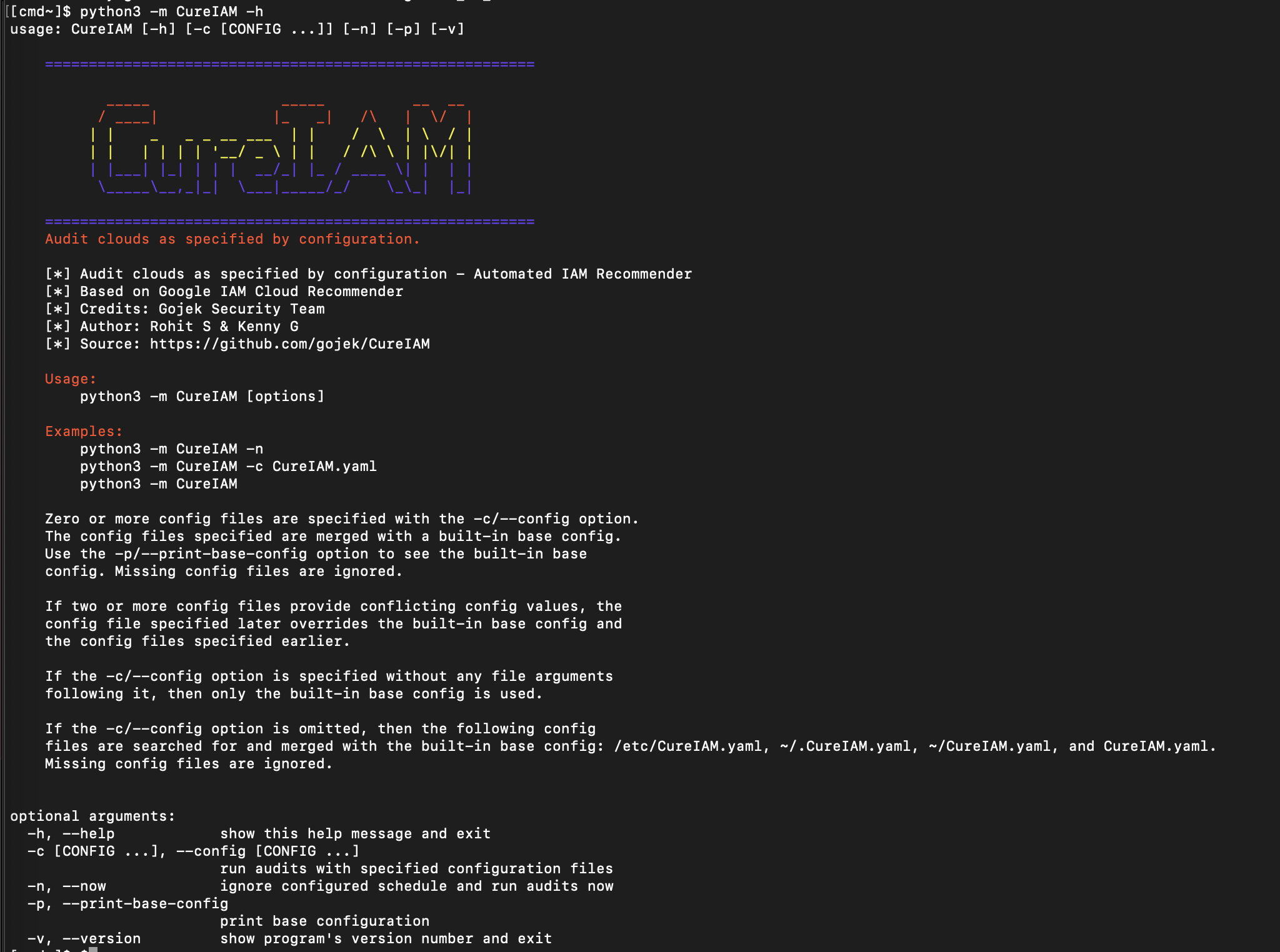
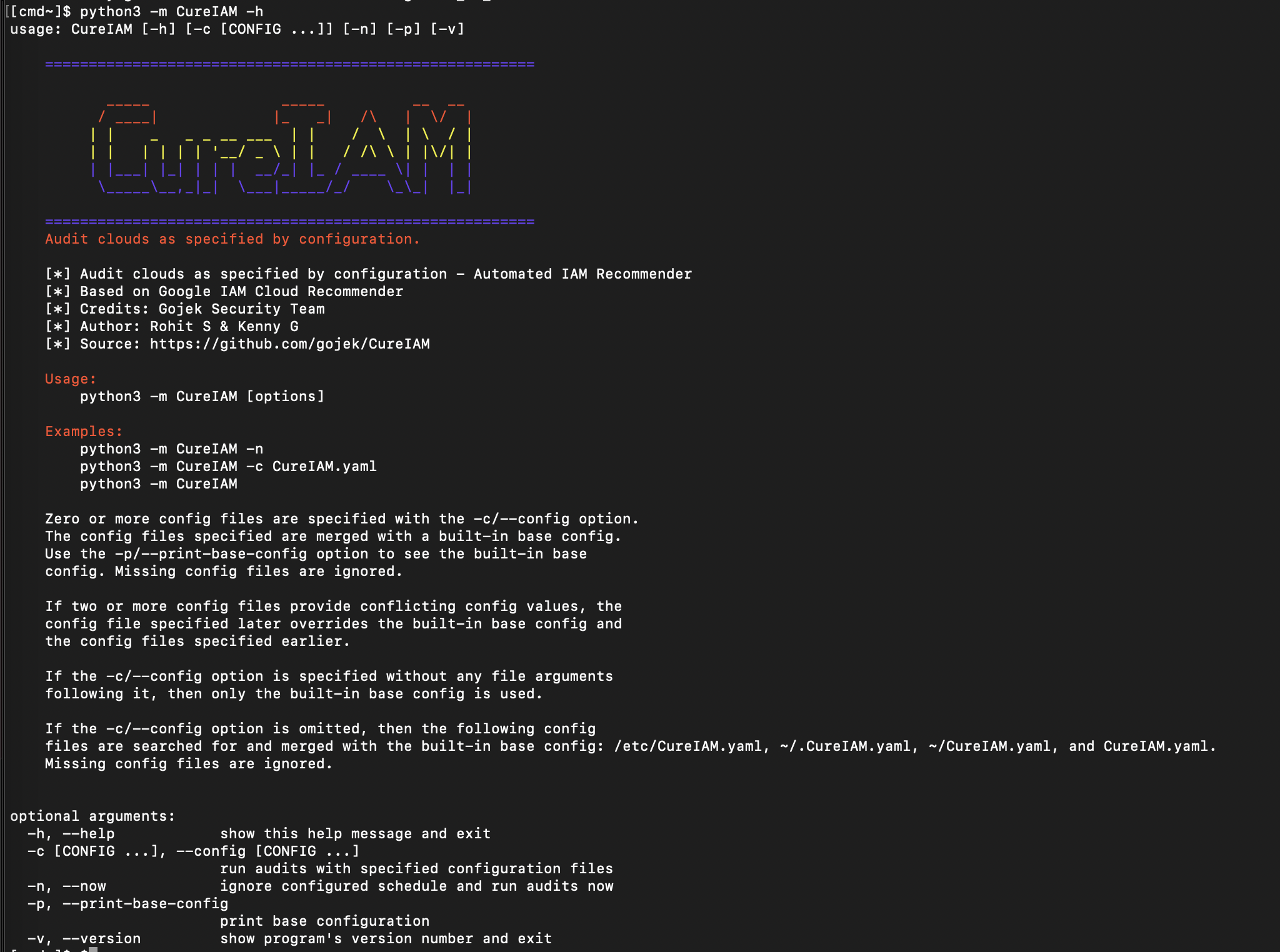
# Check CureIAM help
$ python -m CureIAM --help
CureIAM can be also run inside a docker environment, this is completely optional and can be used for CI/CD with K8s cluster deployment.
# Build docker image from dockerfile
$ docker build -t cureiam .

# Run the image, as schedular
$ docker run -d cureiam

# Run the image now
$ docker run -f cureiam -m cureiam -n
CureIAM.yaml configuration file is the heart of CureIAM engine. Everything that engine does it does it based on the pipeline configured in this config file. Let's break this down in different sections to make this config look simpler.
  logger:
    version: 1

    disable_existing_loggers: false

    formatters:
      verysimple:
        format: >-
            [%(process)s]
            %(name)s:%(lineno)d - %(message)s
        datefmt: "%Y-%m-%d %H:%M:%S"

    handlers:
      rich_console:
        class: rich.logging.RichHandler
        formatter: verysimple

      file:
        class: logging.handlers.TimedRotatingFileHandler
        formatter: simple
        filename: /tmp/CureIAM.log
        when: midnight
        encoding: utf8
        backupCount: 5

    loggers:
      adal-python:
        level: INFO

    root:
      level: INFO
      handlers:
        - rich_console
        - file

  schedule: "16:00"
This subsection of config uses, Rich logging module and schedules CureIAM to run daily at 16:00.
plugins section in CureIAM.yaml. You can think of this section as declaration for different plugins. plugins:
gcpCloud:
plugin: CureIAM.plugins.gcp.gcpcloud.GCPCloudIAMRecommendations
params:
key_file_path: cureiamSA.json
filestore:
plugin: CureIAM.plugins.files.filestore.FileStore
gcpIamProcessor:
plugin: CureIAM.plugins.gcp.gcpcloudiam.GCPIAMRecommendationProcessor
params:
mode_scan: true
mode_enforce: true
enforcer:
key_file_path: cureiamSA.json
allowlist_projects:
- alpha
blocklist_projects:
- beta
blocklist_accounts:
- [email protected]
allowlist_account_types:
- user
- group
- serviceAccount
blocklist_account_types:
- None
min_safe_to_apply_score_user: 0
min_safe_to_apply_score_group: 0
min_safe_to_apply_score_SA: 50
esstore:
plugin: CureIAM.plugins.elastic.esstore.EsStore
params:
# Change http to https later if your elastic are using https
scheme: http
host: es-host.com
port: 9200
index: cureiam-stg
username: security
password: securepassword
Each of these plugins declaration has to be of this form:
  plugins:
    <plugin-name>:
      plugin: <class-name-as-python-path>
      params:
        param1: val1
        param2: val2
For example, for plugins CureIAM.stores.esstore.EsStore which is this file and class EsStore. All the params which are defined in yaml has to match the declaration in __init__() function of the same plugin class.
  audits:
    IAMAudit:
      clouds:
        - gcpCloud
      processors:
        - gcpIamProcessor
      stores:
        - filestore
        - esstore
Multiple Audits can be created out of this. The one created here is named IAMAudit with three plugins in use, gcpCloud, gcpIamProcessor, filestores and esstore. Note these are the same plugin names defined in Step 2. Again this is like defining the pipeline, not actually running it. It will be considered for running with definition in next step.
CureIAM to run the Audits defined in previous step. run:
- IAMAudits
And this makes the entire configuration for CureIAM, you can find the full sample here, this config driven pipeline concept is inherited from Cloudmarker framework.
The JSON which is indexed in elasticsearch using Elasticsearch store plugin, can be used to generate dashboard in Kibana.
[Please do!] We are looking for any kind of contribution to improve CureIAM's core funtionality and documentation. When in doubt, make a PR!
Gojek Product Security Team ❤️
<>
=============
Adding the version in library to avoid any back compatibility issues.
Running docker compose: docker-compose -f docker_compose_es.yaml up
      mode_scan: true
      mode_enforce: false
