 keeweb/keeweb
Free cross-platform password manager compatible with KeePass

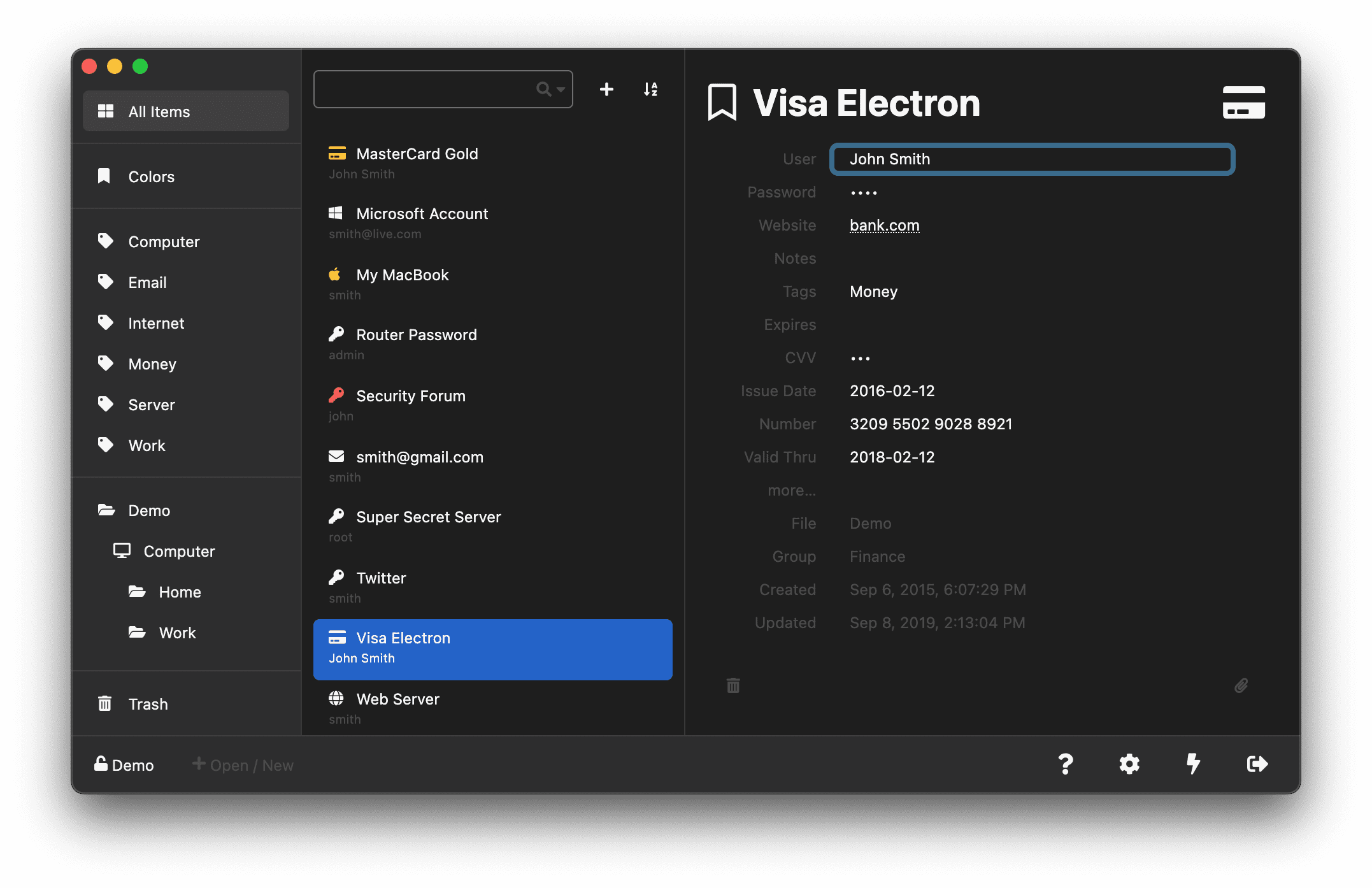
KeeWeb is a browser and desktop password manager which is capable of opening up existing KeePass database `kdbx` files, or creating new vaults to store your important credentials in.
[![Version][github-version-img]][github-version-uri] [![Tests][github-tests-img]][github-tests-uri] [![Downloads][github-downloads-img]][github-downloads-uri] [![Size][github-size-img]][github-size-img] [![Last Commit][github-commit-img]][github-commit-img] ![Contributors][contribs-all-img]
KeeWeb is a password manager which supports managing kdbx files created by other applications such as KeePass, KeePassXC, etc. You choose the platform you wish to run; as KeeWeb supports being installed and ran as either a Desktop application, or in your web-browser.
With support for Linux, Windows, and MacOS, we give you the tools to seamlessly manage your most important credentials across multiple applications and platforms.
Decide how you want to save your credential vault, KeeWeb supports saving your database as a local file, or you can store your password vault with some of the most popular cloud services such as Dropbox, Google Drive, and Microsoft OneDrive.
Review some of our most important links below to learn more about KeeWeb and who we are:
| Topic | Links | Description |
|---|---|---|
| Apps | Web, Desktop | Try out our application |
| Demos | Web, Beta | Test our stable and beta releases of Keeweb |
| Services | Favicon Grabber | Services integrated within Keeweb |
| Branches | docker/alpine-base, docker/keeweb | Important branches related to our project |
| Timeline | Release Notes, TODO | See what we're planning |
| On one page | Features, FAQ | Information about Keeweb development |
| Website | keeweb.info | Visit our official website |
| Social | kee_web | Check us out on our social media |
| Donate | OpenCollective, GitHub | Help keep us going |
Want to self-host your copy of KeeWeb? Everything you need to host this app on your server is provided within the package. KeeWeb itself is a single HTML file combined with a service worker (optionally; for offline access).
You can download the latest distribution files from gh-pages branch.
If you wish to host Keeweb within a Docker container, we provide pre-built images that you can pull into your environment. This section explains how to run Keeweb using docker run, or by setting up a docker-compose.yml file.
[!NOTE] For a full set of Docker instructions, visit our docker/keeweb readme
Use any of the following images in your 📄 docker-compose.yml or run command:
| Service | Version | Image Link |
|---|---|---|
Docker Hub | [![Docker Version][dockerhub-version-ftb-img]][dockerhub-version-ftb-uri] | 🔖 keeweb/keeweb:latest 🔖 keeweb/keeweb:1.19.0 🔖 keeweb/keeweb:1.19.0-amd64 🔖 keeweb/keeweb:1.19.0-arm64 🔖 keeweb/keeweb:development 🔖 keeweb/keeweb:development-amd64 🔖 keeweb/keeweb:development-arm64 |
Github | [![Github Version][github-version-ftb-img]][github-version-ftb-uri] | 🔖 ghcr.io/keeweb/keeweb:latest 🔖 ghcr.io/keeweb/keeweb:1.19.0 🔖 ghcr.io/keeweb/keeweb:1.19.0-amd64 🔖 ghcr.io/keeweb/keeweb:1.19.0-arm64 🔖 ghcr.io/keeweb/keeweb:development 🔖 ghcr.io/keeweb/keeweb:development-amd64 🔖 ghcr.io/keeweb/keeweb:development-arm64 |
If you wish to use docker run; use the following command:
docker run -d --restart=unless-stopped -p 443:443 --name keeweb -v ${PWD}/keeweb:/config ghcr.io/keeweb/keeweb:latest
For users wishing to use docker compose, create a new docker-compose.yml with the following:
services:
    keeweb:
        container_name: keeweb
        image: ghcr.io/keeweb/keeweb:latest       # Github image
      # image: keeweb/keeweb:latest               # Dockerhub image
        restart: unless-stopped
        volumes:
            - ./keeweb:/config
        environment:
            - PUID=1000
            - PGID=1000
            - TZ=Etc/UTC
You can put this container behind Traefik if you want to use a reverse proxy and let Traefik handle the SSL certificate management.
[!NOTE] These steps are optional.
If you do not use Traefik, you can skip this section of steps. This is only for users who wish to put this container behind Traefik.
If you do not wish to use Traefik, remember that if you make your Keeweb container public facing, you will need to utilize a service such as certbot/lets encrypt to generate SSL certificates.
Our first step is to tell Traefik about our Keeweb container. We highly recommend you utilize a Traefik dynamic file, instead of labels. Using a dynamic file allows for automatic refreshing without the need to restart Traefik when a change is made.
If you decide to use labels instead of a dynamic file, any changes you want to make to your labels will require a restart of Traefik.
We will be setting up the following:






